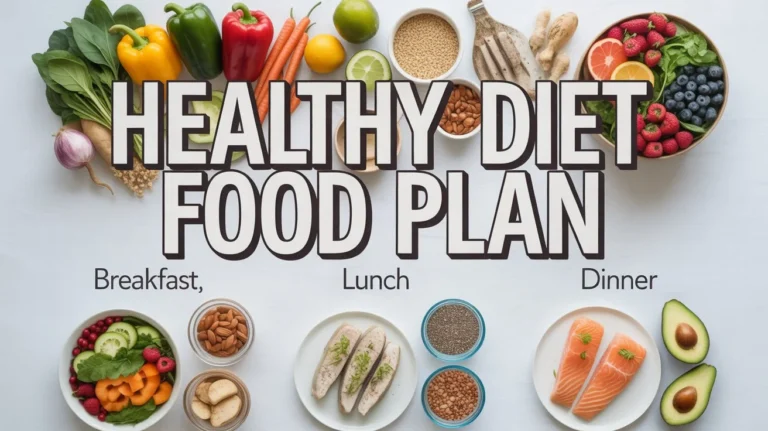
Balanced Diet Chart for School Project
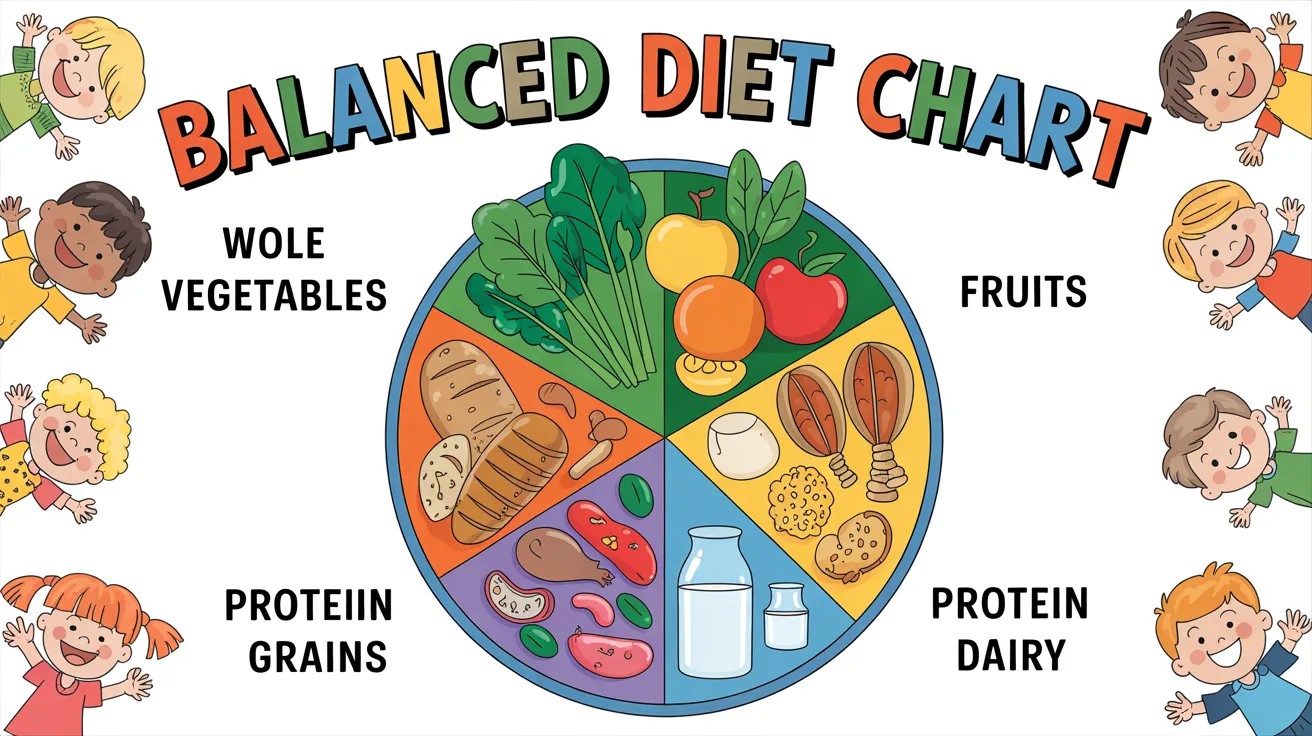
A balanced diet chart is a visual guide that shows all the different foods you should eat to keep your body healthy and strong. It tells you exactly what kinds of food to include in your meals and how much of each type you need every day to grow, have energy, and stay fit. Schools often ask students to make these charts for projects because they help you learn about nutrition in a practical way that you can actually use in your real life.
When you understand how to eat a balanced diet, you give your body the fuel it needs to do well in school, play sports, and feel great every single day. This article teaches you everything you need to know about creating a balanced diet chart for your school project and using it to make better food choices.
What is a Balanced Diet Chart?
A balanced diet chart is a visual guide that shows all the different foods you should eat to keep your body healthy. It tells you exactly what kinds of food to include in your meals and how much of each type you need every day. Think of it like a roadmap for eating right. When you follow it, your body gets all the nutrients it needs to grow, have energy, and stay strong. Schools often ask students to make these charts for projects because they help you learn about nutrition in a practical way that you can actually use in real life.
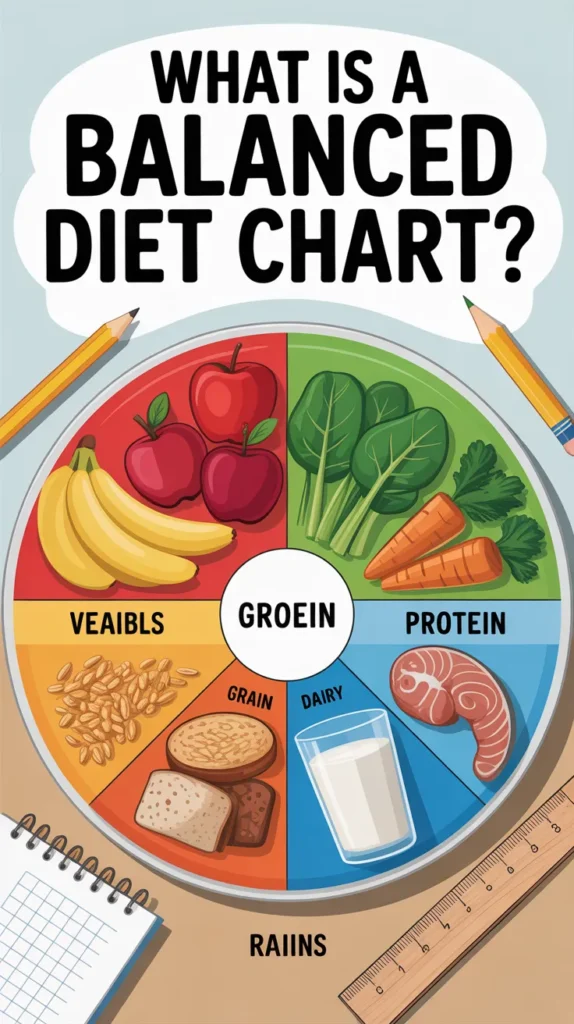
Your body works like a machine that needs different fuel to run correctly. Some foods give you quick energy, some help your muscles grow, some protect you from getting sick, and some keep your bones strong. A balanced diet chart organizes all these foods into groups so you can see what you need each day. When you make one for your school project, you learn how to read nutrition information, understand what your body needs, and make smarter choices about what you eat. This knowledge sticks with you and helps you develop good eating habits that last your whole life.
Why Does Your Body Need Different Foods?
Your body is made up of many systems that all need different things to work properly. Your muscles need protein to grow and repair themselves after you exercise or play sports. Your brain needs carbohydrates to focus in class and remember what you learn. Your heart and other organs need healthy fats to function correctly. Your bones need calcium and other minerals to become strong and stay that way as you grow. Without these different nutrients working together, your body cannot perform at its best.
Each food group does a specific job that no other food can do exactly the same way. If you only eat bread and rice, you get energy but your muscles start to weaken because you miss out on protein. If you skip vegetables and fruits, you lose important vitamins that fight off colds and infections. If you never eat dairy products, your bones might not grow as strong as they should. Your body needs balance because all these nutrients work together like players on a team. When everyone shows up and does their part, the whole system runs smoothly and you feel great, sleep well, and do better in school.
The Main Food Groups Explained
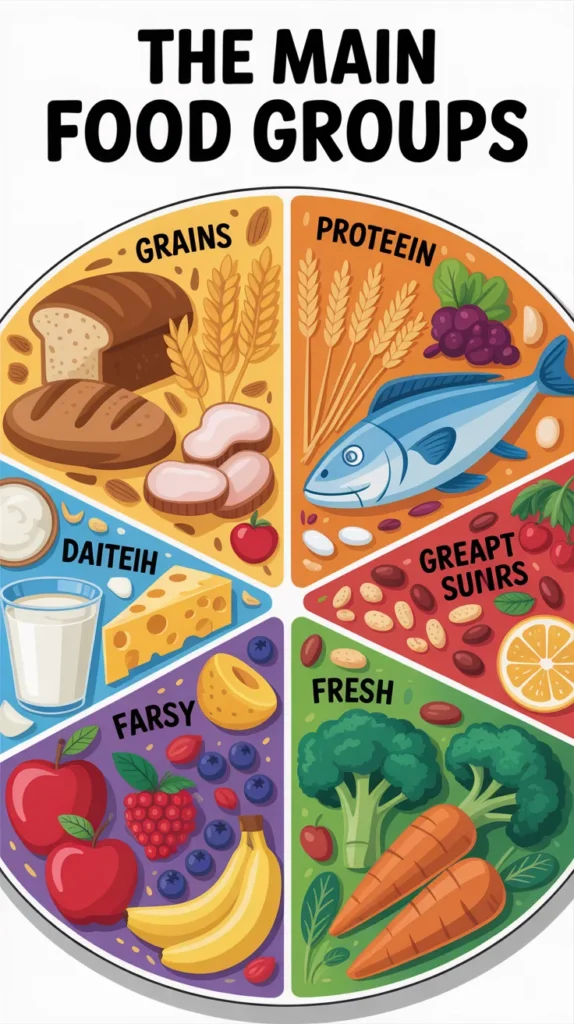
Eating healthy means choosing foods from five main groups that each give your body different things it needs to grow strong and stay healthy. These groups are grains, proteins, dairy, fruits, and vegetables. By eating a variety of foods from each group every day, you’ll get all the vitamins, minerals, and energy your body needs to learn, play, and feel your best. Here are the main groups of food.”
Grains
Grains include foods like bread, rice, pasta, and cereal. These foods give your body quick energy so you can run around, play sports, and think clearly in class. Whole grains are even better because they have more fiber that keeps your stomach healthy. You should eat about six servings of grains each day, but try to make at least half of them whole grain choices. Brown rice and whole wheat bread are good examples of whole grains that your body loves.
Proteins
Proteins help build and repair your muscles, skin, and bones. You can get protein from meat like chicken and beef, but also from beans, eggs, nuts, and fish. Fish is especially good because it has special fats that help your brain work better. You need about five and a half ounces of protein daily, which is roughly the size of your palm. Mixing different protein sources keeps your meals interesting and gives you different kinds of nutrients.
Dairy
Dairy products like milk, cheese, and yogurt give you calcium that makes your bones strong and helps your teeth stay healthy. You need about three cups of dairy each day. If you do not like regular milk, you can try yogurt or cheese instead. Low fat or fat free milk is the best choice because it has all the calcium without too much fat.
Fruits
Fruits taste sweet and give you vitamins that protect your body from getting sick. Apples, bananas, oranges, and berries are all great choices. You should eat about two cups of fruit daily in different colors because each color has different healthy stuff in it. Fresh fruit is best, but frozen fruit works just as well.
Vegetables
Vegetables come in many colors like green, orange, red, and purple, and each color feeds your body different nutrients. Broccoli, carrots, spinach, and sweet potatoes all help you stay healthy and strong. You need about two and a half cups of vegetables each day. Eating different colored vegetables makes sure you get all the vitamins and minerals your body needs to work its best.
How Much Food Should You Eat
The amount of food you need depends on how old you are, how much you weigh, and how active you are. A kid who plays sports every day needs more food than a kid who sits most of the time. Your body also needs more food as you grow taller and heavier. Most school age kids need between 1800 and 2200 calories each day. A calorie is just a way to measure how much energy food gives your body.
Here is what a typical school age kid should eat each day based on age and activity level:
| Food Group | Ages 9-10 | Ages 11-13 | Ages 14-18 |
| Grains | 5 to 6 ounces | 6 ounces | 7 to 8 ounces |
| Proteins | 4 to 5 ounces | 5 to 5.5 ounces | 5.5 to 6.5 ounces |
| Proteins | 2.5 cups | 3 cups | 3 cups |
| Dairy | 1.5 to 2 cups | 1.5 to 2 cups | 2 cups |
| Fruits | 1.5 to 2 cups | 2 to 2.5 cups | .5 to 3 cups |
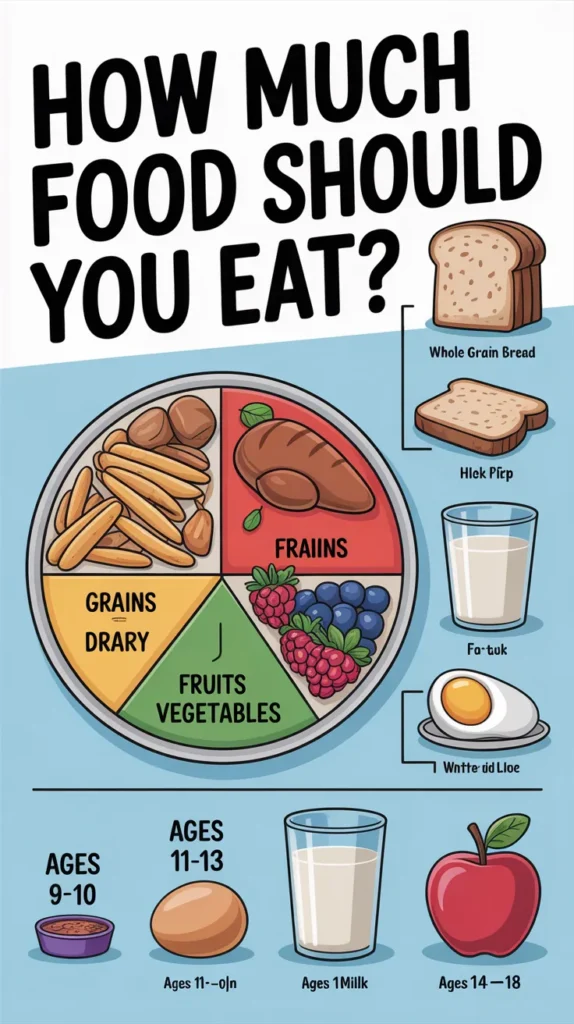
One ounce of grain is equal to one slice of bread or half a cup of rice. One ounce of protein is like one egg or one ounce of chicken. One cup of dairy is a glass of milk or yogurt. One cup of fruit can be fresh pieces or one medium apple or banana. One cup of vegetables can be raw or cooked pieces.
Kids who play sports or exercise a lot might need more food than these amounts. If you feel hungry after meals, you probably need to eat a little bit more. If you feel too full and uncomfortable, you might be eating too much. Your body sends you signals when it needs food and when it is full, so learn to listen to what it tells you.
Proteins and Why They Matter
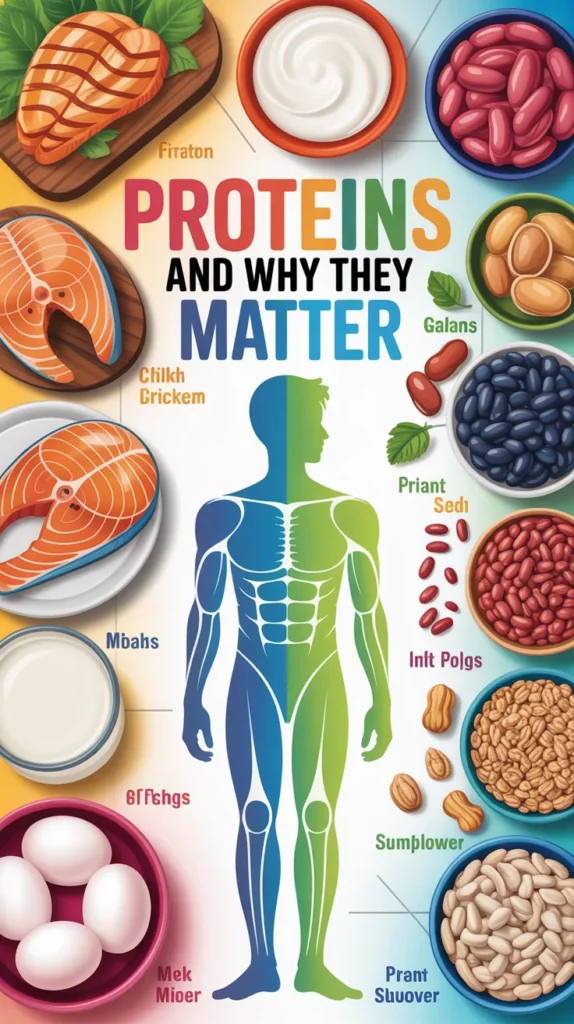
Proteins are nutrients your body needs every single day to stay healthy and strong. They help you grow, build muscle, and repair your body after exercise. Eating the right amount of protein gives you energy and keeps you feeling good throughout the day.
What Proteins Do for Your Body
Proteins are the building blocks your body uses to build and repair muscles, skin, hair, and bones. When you exercise, your muscles get tiny tears and protein fixes them, making your muscles stronger. Your body also uses protein to make enzymes and hormones that control how everything works inside you. Without enough protein, your muscles stay weak and you feel tired all the time.
Types of Proteins
There are two types of proteins: animal proteins and plant proteins. Animal proteins come from meat, fish, chicken, eggs, and dairy. These have all nine amino acids your body needs. Plant proteins come from beans, lentils, nuts, and seeds. Most need to be mixed together to give you all the amino acids you need.
How Much Protein You Need
You should eat protein at every meal. A serving is about the size of your palm. You could eat chicken at lunch, beans at dinner, or nuts for a snack. Fish helps your brain, eggs help you remember things, and beans help your stomach stay healthy.
Benefits of Eating Enough Protein
Eating enough protein helps you grow taller, stay strong, do well in sports, and think clearly in school. Your hair and skin also look better with enough protein. Many kids do not eat enough protein and then feel tired or get sick often. Adding one more serving of protein to your daily meals makes a real difference.
- Growth and Development
Eating enough protein is essential for helping your body grow taller and develop properly. Proteins provide the building blocks your muscles, bones, and organs need to grow strong and healthy. For kids and teens, getting enough protein can make a noticeable difference in overall growth. - Strength and Physical Performance
Protein supports strong muscles, making it easier to stay active and do well in sports. When your muscles have enough protein, you can run, jump, and play with more energy and less fatigue. This also helps prevent injuries and supports quicker recovery after physical activity. - Brain Function and Learning
Your brain relies on protein to produce important chemicals called neurotransmitters, which help you focus, remember information, and think clearly in school. Eating enough protein can improve concentration, problem-solving skills, and overall mental alertness. - Healthy Hair, Skin, and Nails
Protein plays a major role in keeping your hair shiny, your skin smooth, and your nails strong. Without enough protein, hair can become brittle, skin may look dull, and nails can break easily. Adding protein to your diet helps you look and feel your best. - Energy and Immunity
Not getting enough protein can make you feel tired, weak, or sick more often. Proteins are essential for your immune system to fight off infections and keep you healthy. Even adding one extra serving of protein to your daily meals—like eggs, yogurt, beans, or lean meat—can make a real difference in energy levels and overall health.
Carbohydrates Give You Energy
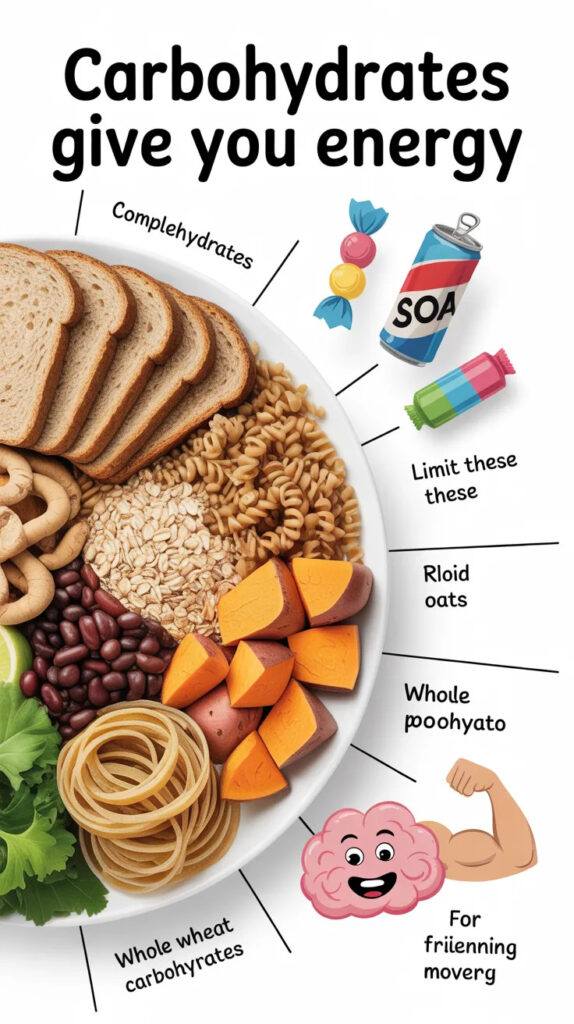
Carbohydrates are your body’s main source of fuel and energy. They power your brain so you can focus in class and remember what you learn. Carbohydrates also give your muscles the energy to run, play sports, and do all your daily activities. Your body breaks down carbohydrates into glucose, which is a simple sugar that your cells use for power.
What Carbohydrates Do for Your Body
Carbohydrates fuel your brain and muscles so you can think clearly and move around. When you eat carbohydrates, your body converts them into glucose that travels through your blood to give energy to every cell. Your brain alone uses about twenty percent of the energy your body makes, so carbohydrates are super important for school and learning. Without enough carbohydrates, you feel tired, sad, and cannot focus on your work.
Two Types of Carbohydrates
Simple carbohydrates break down quickly and give you fast energy. These include white bread, candy, soda, and cookies. They taste good but do not keep you full for long. Complex carbohydrates break down slowly and give you steady energy all day long. These include brown rice, whole wheat bread, beans, and sweet potatoes. Complex carbohydrates also have fiber that keeps your stomach healthy and helps you feel full longer.
How Much Carbohydrates You Need
Most kids your age need about six ounces of carbohydrates each day. One ounce equals one slice of bread, half a cup of rice, or half a cup of pasta. Try to make at least half of your carbohydrates come from whole grains and complex sources. This means choosing brown rice over white rice and whole wheat bread over white bread.
Benefits of Eating the Right Carbohydrates
Eating the right carbohydrates helps you stay awake in class, do better on tests, and have energy for sports. Complex carbohydrates keep your blood sugar steady so you do not get shaky or irritable. They also give you fiber that helps your digestion work properly. Choosing good carbohydrates over sugary ones makes you feel better and healthier every day.
Also Check: Best Mediterranean diet recipes
Healthy Fats for Your Body
Fats get a bad reputation, but your body actually needs healthy fats to work properly. They help your brain develop, keep your skin healthy, and give you long lasting energy. Healthy fats also help your body absorb vitamins that you need to stay strong. The key is eating the right kinds of fats and not eating too much.
What Healthy Fats Do for Your Body
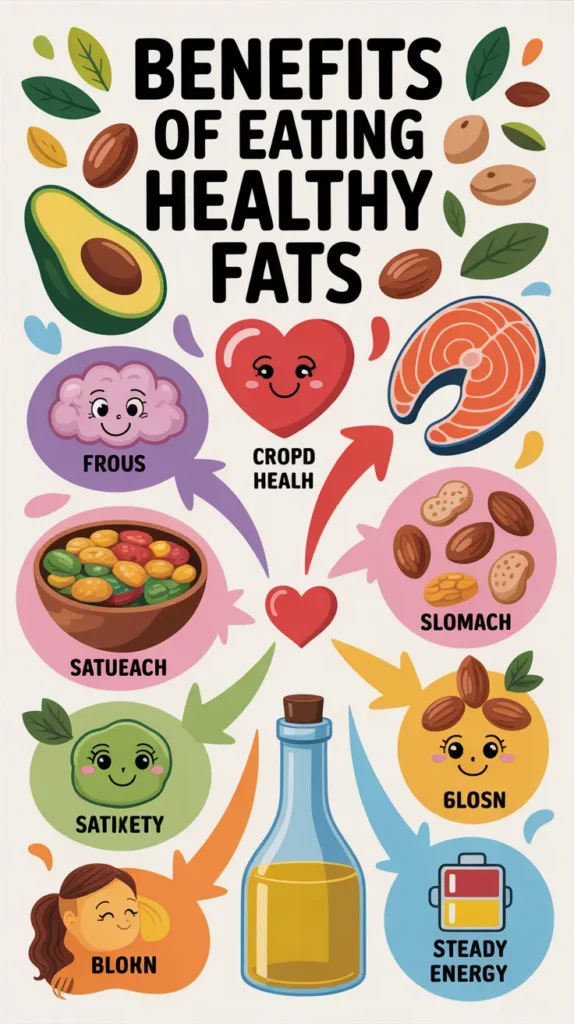
Healthy fats are an essential part of a balanced diet that support your body in many ways. They help your brain work better, keep your energy steady, and protect your heart, skin, and hair. Including the right fats in your meals is key to staying healthy and strong every day.
- Brain Development and Focus
- Healthy fats, like those found in avocados, nuts, seeds, and fish, are essential for brain growth and function. Eating enough healthy fats helps your brain develop properly and improves your ability to concentrate in class, remember information, and solve problems more effectively.
- Feeling Full and Satisfied
- Healthy fats take longer to digest, which means you stay full after meals and are less likely to snack on unhealthy foods. This helps you avoid getting hungry too quickly and supports better portion control throughout the day.
- Healthy Skin and Hair
- Fats provide essential nutrients that keep your skin clear, soft, and glowing. They also strengthen hair, making it look shiny, smooth, and healthy. Without enough healthy fats, skin can become dry and hair may look brittle or weak.
- Heart and Blood Pressure Support
- Consuming healthy fats, such as olive oil, fatty fish, and nuts, helps maintain a healthy heart and keeps blood pressure in a normal range. These fats reduce the risk of heart problems by supporting good cholesterol levels and overall cardiovascular health.
- Steady Energy Levels
- Unlike sugary foods that give a quick burst of energy followed by a crash, healthy fats provide a slow, steady source of energy throughout the day. This helps you stay active, alert, and focused without feeling tired or sluggish between meals.
Types of Healthy Fats
- Unsaturated fats come from fish, nuts, seeds, olive oil, and avocados and are the best choice for your body
- Omega 3 fats come from fish like salmon and help your brain work better
- Saturated fats come from butter, cheese, and fatty meat and you should eat less of these
- Trans fats come from fried foods and processed snacks and you should avoid them completely
How Much Fat You Need
- Kids your age need about five to six teaspoons of oil or fat each day
- One teaspoon of oil is about the same as a small handful of nuts or a quarter of an avocado
- Most kids eat too much fat without realizing it because it hides in many foods like chips, cookies, and fried chicken
Benefits of Eating Healthy Fats
- Your brain develops better and you concentrate longer in class
- You feel full longer after meals so you do not get hungry as quickly
- Your skin stays clear and your hair looks healthy and strong
- Your heart stays healthy and your blood pressure stays normal
- You have steady energy throughout the day without energy crashes
Vitamins and Minerals Keep You Strong
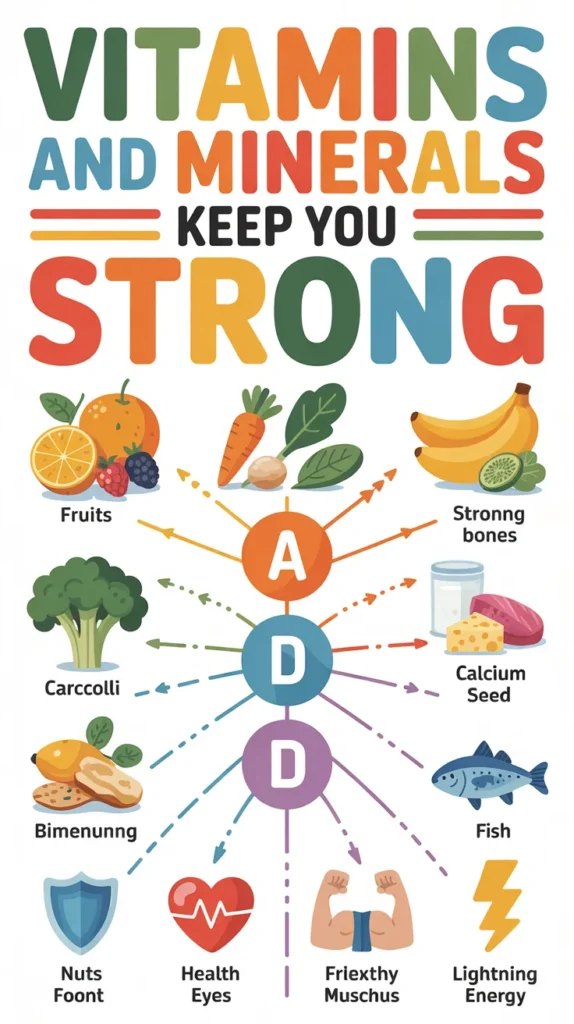
Vitamins and minerals are tiny nutrients your body needs to work properly and stay healthy. They help your bones grow strong, your immune system fight off sickness, and your eyes see clearly. Your body cannot make most vitamins and minerals on its own, so you have to get them through the food you eat. Eating a variety of colorful fruits and vegetables is the best way to get all the vitamins and minerals you need.
What Vitamins Do for Your Body
- Vitamin A helps your eyes see better and keeps your skin healthy and smooth
- Vitamin C helps your immune system fight colds and infections and heals cuts and scrapes faster
- Vitamin D helps your bones absorb calcium so they grow strong and do not break easily
- B vitamins help your body turn food into energy so you have fuel to play and learn
- Vitamin E protects your cells from damage and keeps your skin looking good
What Minerals Do for Your Body
- Calcium makes your bones and teeth strong and helps your muscles contract when you move
- Iron carries oxygen through your blood so your muscles and brain get the fuel they need
- Potassium helps your heart beat regularly and keeps your muscles working properly
- Magnesium helps your bones stay strong and your nerves send messages to your brain
- Zinc helps your immune system fight germs and helps your wounds heal quickly
Best Food Sources for Vitamins and Minerals
- Orange and yellow fruits and vegetables like carrots, sweet potatoes, and oranges have lots of vitamin A
- Green vegetables like broccoli and spinach have calcium, iron, and many other minerals
- Berries, citrus fruits, and tomatoes have plenty of vitamin C
- Eggs, fish, and dairy products have vitamin D and calcium
- Nuts, seeds, and beans have magnesium and other important minerals
Common Mistakes to Avoid
Many kids make mistakes when planning their diet that keep them from staying healthy and having energy. Knowing what these mistakes are helps you avoid them and make better food choices every day. Learning about these common problems now sets you up for a lifetime of good eating habits.
Skipping Breakfast
- Many kids skip breakfast to sleep longer or because they are not hungry in the morning
- Eating breakfast gives your brain fuel to focus in class and do better on tests
- Kids who skip breakfast feel tired by mid morning and cannot concentrate on their work
- A simple breakfast like toast with peanut butter and fruit takes only five minutes to eat
Eating Too Many Sugary Foods
- Candy, soda, cookies, and sweetened cereals taste good but give you quick energy that crashes fast
- Sugary foods cause your blood sugar to go up and down, making you feel tired and moody
- Too much sugar leads to cavities in your teeth and weight gain over time
- Replace sugary snacks with fruit, nuts, or yogurt that give you steady energy
Not Eating Enough Vegetables
- Many kids avoid vegetables because they think they taste bad or look strange
- Vegetables have vitamins and minerals that protect you from getting sick and help you grow
- You miss out on important nutrients when you skip vegetables at meals
- Try roasting vegetables with a little oil or mixing them into foods you already like
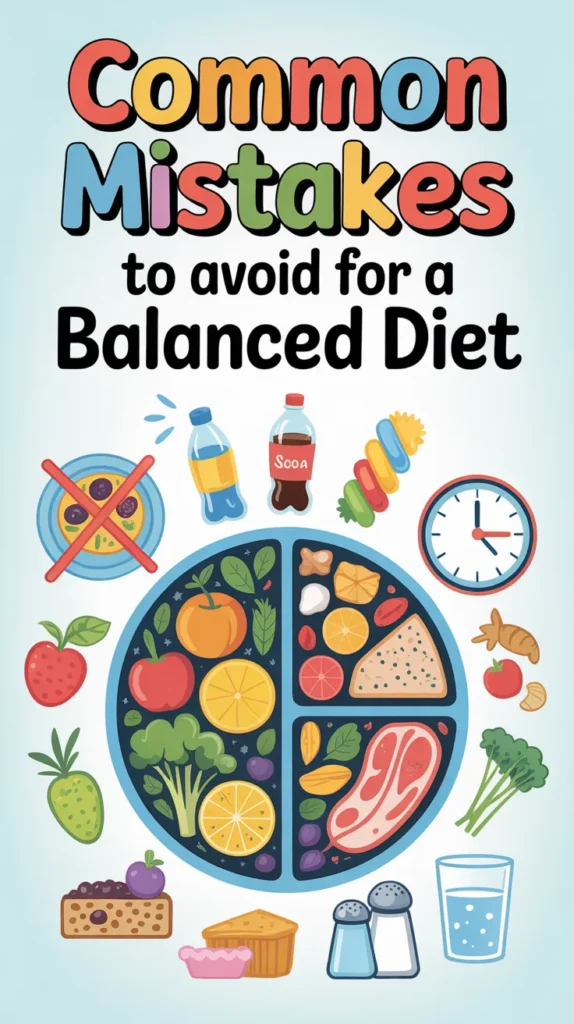
Drinking Too Much Soda and Juice
- Soda has lots of sugar and no nutrition that your body needs
- Even juice has a lot of sugar even though it comes from fruit
- Drinking sugary drinks causes cavities and weight gain
- Water is the best drink for your body and you should drink it throughout the day
Eating Meals Too Fast
- Kids who eat too fast do not chew their food well and get stomach problems
- Your brain takes twenty minutes to realize you are full, so eating fast makes you eat too much
- Eating slowly helps your digestion work better and you feel satisfied with less food
- Put your fork down between bites and chew your food well
Not Eating Enough Protein
- Many kids fill up on bread and skip protein sources like meat, beans, and eggs
- Without enough protein, your muscles stay weak and you feel tired
- Protein keeps you full longer than carbohydrates alone
- Add a protein source to every meal and snack
Forgetting to Drink Water
- Kids often drink soda or juice instead of water because it tastes better
- Water keeps your body cool, helps your digestion, and gives your brain energy
- Even mild dehydration makes you tired and unable to focus in school
- Drink water before meals, after exercise, and throughout the day
Eating Too Much Salt
- Salty snacks like chips and fast food taste good but too much salt is bad for your heart
- High salt intake can raise your blood pressure even at a young age
- Your body only needs a little salt to work properly
- Choose fresh fruits and vegetables over salty packaged snacks
Final thoughts:
Creating and following a balanced diet chart is one of the best things you can do for your health and future. A balanced diet gives your body all the nutrients it needs to grow strong, think clearly, and have energy for everything you do. By learning about food groups, serving sizes, and nutrition now, you build habits that last your whole life. You feel better, do better in school, and have more energy when you eat right. Your school project is not just about getting a good grade, it teaches you how to take care of yourself and make smart choices about food every single day. Start using what you learn today and you will notice the difference in how you feel and perform in just a few weeks.